
New Cascadia Facility Aims to Build Demand for Farmed Kelp
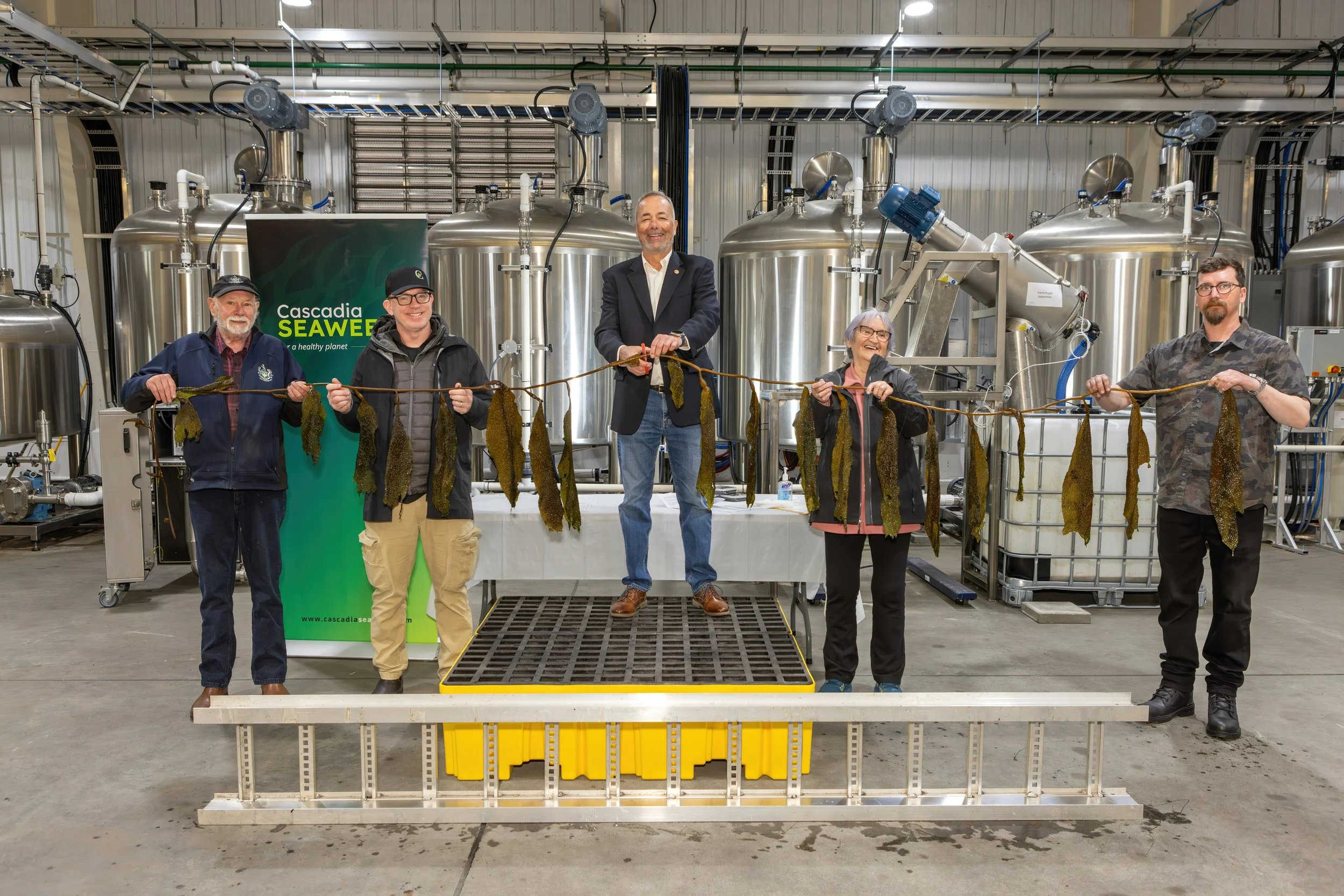
Photo credit: Cascadia Seaweed
Kelp farming in North America has made significant progress over the past decade. More farms are in the water, seed quality and yields have improved, and farmers are collaborating to meet growing demand. But for the sector to mature, farmers need processors, buyers, and end markets capable of purchasing large volumes of kelp year after year.
This spring, Cascadia Seaweed opened a new kelp processing facility in Port Edward, British Columbia, marking a significant infrastructure milestone for the company and expanding processing capacity for farmed kelp in the region. Cascadia cultivates kelp in partnership with coastal First Nations, processes it into agricultural products, and sells those products to North American markets.
Located near Cascadia's primary growing areas along the Alaska-BC border, the facility was developed in partnership with the Metlakatla First Nation through the Metlakatla Development Corporation, which holds licensing authority over ocean acreage in the region.
“All the factors together—a knowledgeable First Nations partner, a large growing area, suitable infrastructure, great transport, and proximity to our Alaskan suppliers—all signs pointed to it being a good location,” says Michael, CEO and Co-Founder of Cascadia Seaweed.
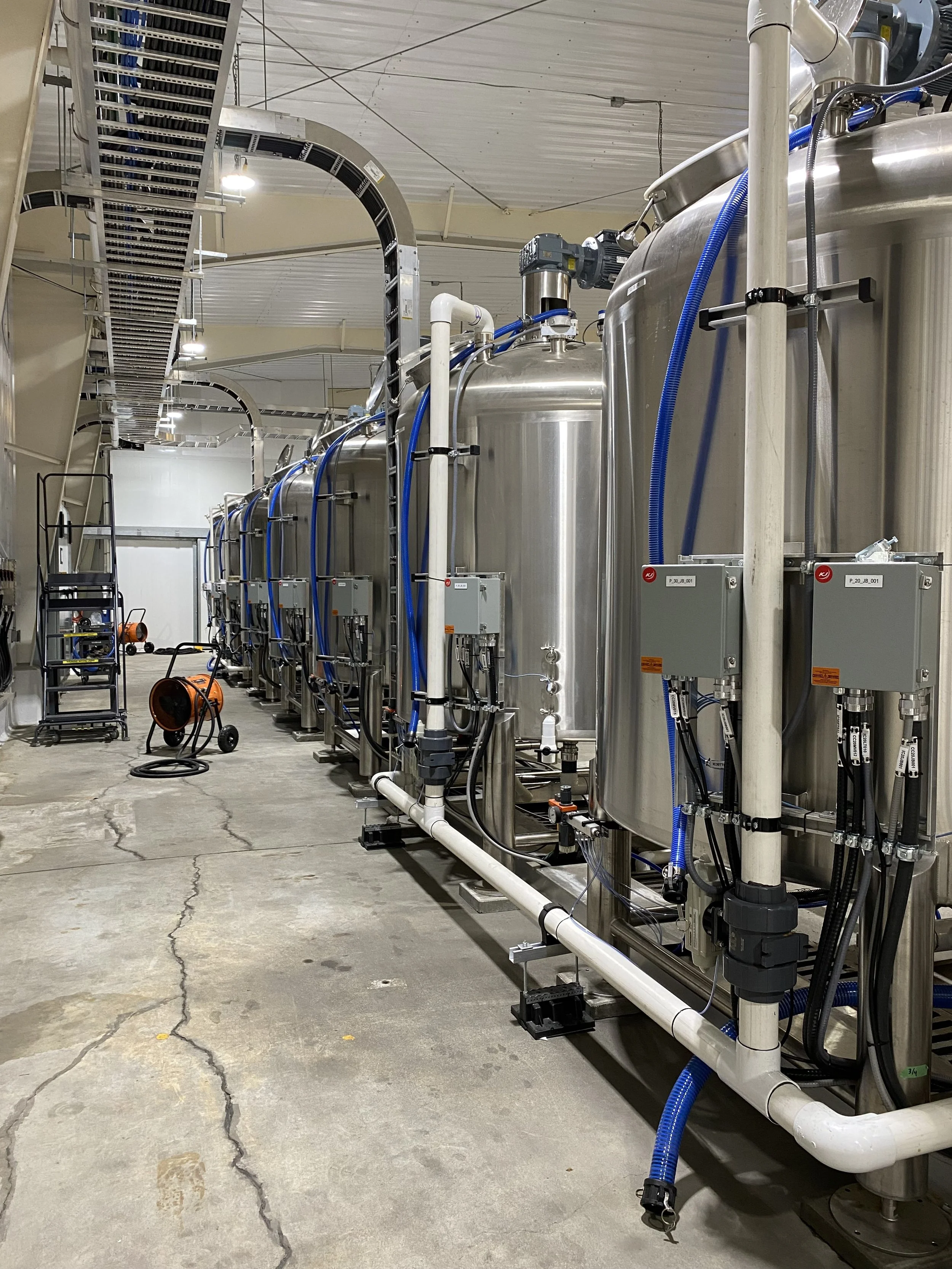
Photo credit: Cascadia Seaweed
The new Port Edward facility is designed to process and refine kelp at a large scale. Cascadia's previous processing site could produce roughly 10,000 liters of product per month. The new plant has the capacity to process up to 2,500 tonnes of kelp annually and produce up to 2.5 million liters of liquid kelp extract as demand grows.
In addition to processing kelp from its own farming operations, Cascadia has sourced farmed sugar kelp from Alaska for the past two seasons. The new facility strengthens Cascadia's ability to process kelp sourced from both British Columbia and Alaska, creating additional market opportunities for cultivators across the region.
The relationship also highlights the importance of reliable networks in an emerging industry. GreenWave works alongside Cascadia and Alaska farmers to facilitate partnerships and strengthen market opportunities across the region. "When relationships are new, having a trusted organization to help make those connections is incredibly valuable," Michael says.
Like many early seaweed entrepreneurs, Cascadia explored several possibilities before settling on agriculture. The company evaluated food products and other applications but ultimately saw the strongest opportunity in kelp-based biostimulants—natural crop inputs that help land-based plants better withstand environmental stress and use nutrients more efficiently.
“Seaweed has many potential applications,” says Michael, “We have chosen to focus on its beneficial role in agriculture as the best product-market fit for us.”
The global biostimulant sector is estimated at roughly $4 billion and continues to grow, with seaweed-derived products representing a significant share of the market. Most of those products are made from wild-harvested seaweed, but Cascadia is using cultivated kelp as a more scalable, traceable, and reliable source of biomass.
Success in agriculture, however, depends on earning the trust of land farmers. "Farmers don't want any change unless there's a proven return on investment," Michael says. "It's incumbent upon us to provide a consistent, competitive product with each application, time after time."
The new facility uses a continuous processing system that chops kelp, extracts its bioactive compounds, pasteurizes, filters, and bottles the finished product on a single sequential production line. The facility opened officially in May, with full operational capacity expected this summer.
Looking ahead, Michael expects more companies to enter the seaweed biostimulant market as demand grows and cultivation expands across North America. "It's going to be competitive," he says. "But I'd like to think that upstream we all need to work together and collaborate."
That momentum is already growing across the West Coast of North America, as more companies invest in processing infrastructure and value chains for cultivated seaweed.
For seaweed farmers, that growth could mean more buyers, more processing infrastructure, and more pathways for cultivated kelp to reach the market. As North America's seaweed industry continues to mature, facilities like Cascadia's may help bridge the gap between growing kelp and building lasting demand for it.