
Can Kelp Close the Gap on Water Quality Requirements?
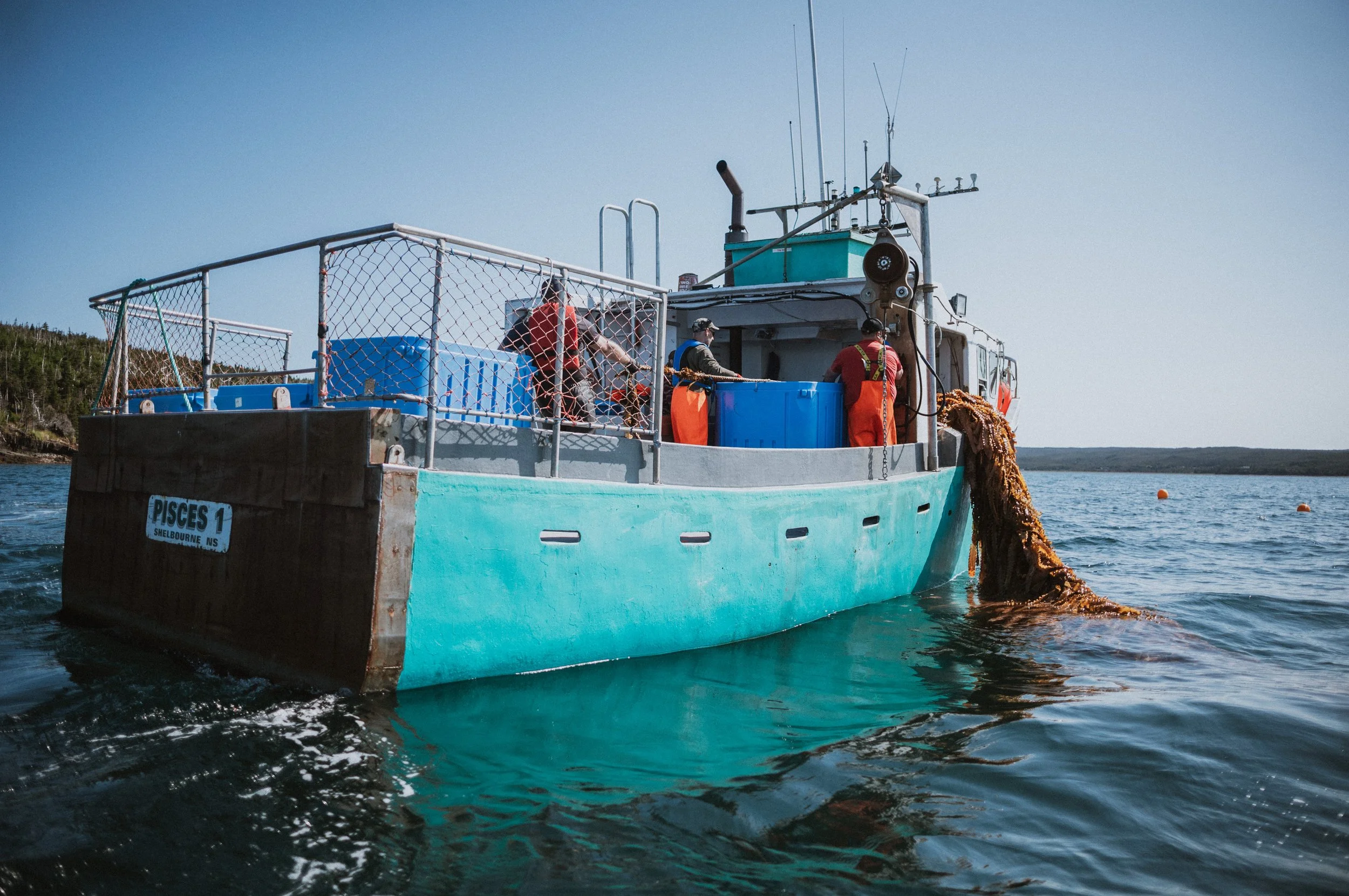
Not long ago, seaweed carbon credits generated major excitement across Europe and North America. The idea was compelling: fund kelp restoration through blue carbon markets, with ocean farmers growing climate solutions. But that momentum stalled.
Scandals in the voluntary carbon market and the challenge of proving ocean-based carbon accounting slowed progress. And without clear regulatory pathways, the market moved on.
Now, the focus is shifting—driven by water quality regulations rather than voluntary blue carbon markets. Researchers have studied seaweed’s nutrient-removal potential for years, and as regulations tighten, that work may begin to translate into economic incentives to test the concept at scale. If the approach proves viable, kelp farms could help communities meet nutrient reduction requirements while opening new revenue streams for ocean farmers.
Through bioremediation, kelp absorbs excess nitrogen and phosphorus from coastal waters—the nutrients driving harmful algal blooms and eutrophication. When kelp biomass is harvested, the nutrients it absorbs are removed with it.
Unlike blue carbon markets, nutrient reduction is local, measurable, and directly tied to existing environmental regulations. Municipalities already face legal requirements to reduce nutrient discharge into coastal waters. In places like Newfoundland, Canada, those requirements are putting pressure on aging wastewater systems and creating an opening to test kelp as part of the solution.
Across the province, small coastal towns are grappling with an infrastructure challenge. Regulations now require municipalities to reduce nutrient discharge. For many communities, traditional infrastructure upgrades are prohibitively expensive.
In Conception Bay South, the second-largest community in the province, compliance would require the construction of a second sewage treatment plant. In St. John's, upgrades are estimated at roughly $300 million CAD. For smaller towns with annual budgets a fraction of that size, upgrades on that scale are out of reach.
"These small communities don't have a big tax base," says Michael Teasdale, owner of HoldFastNL, a Newfoundland kelp farm and liquid seaweed extract producer. "They can't build multi-million dollar facilities. Estimates put it at hundreds of millions for Newfoundland alone, billions for Eastern Canada, to get all these towns up to speed."
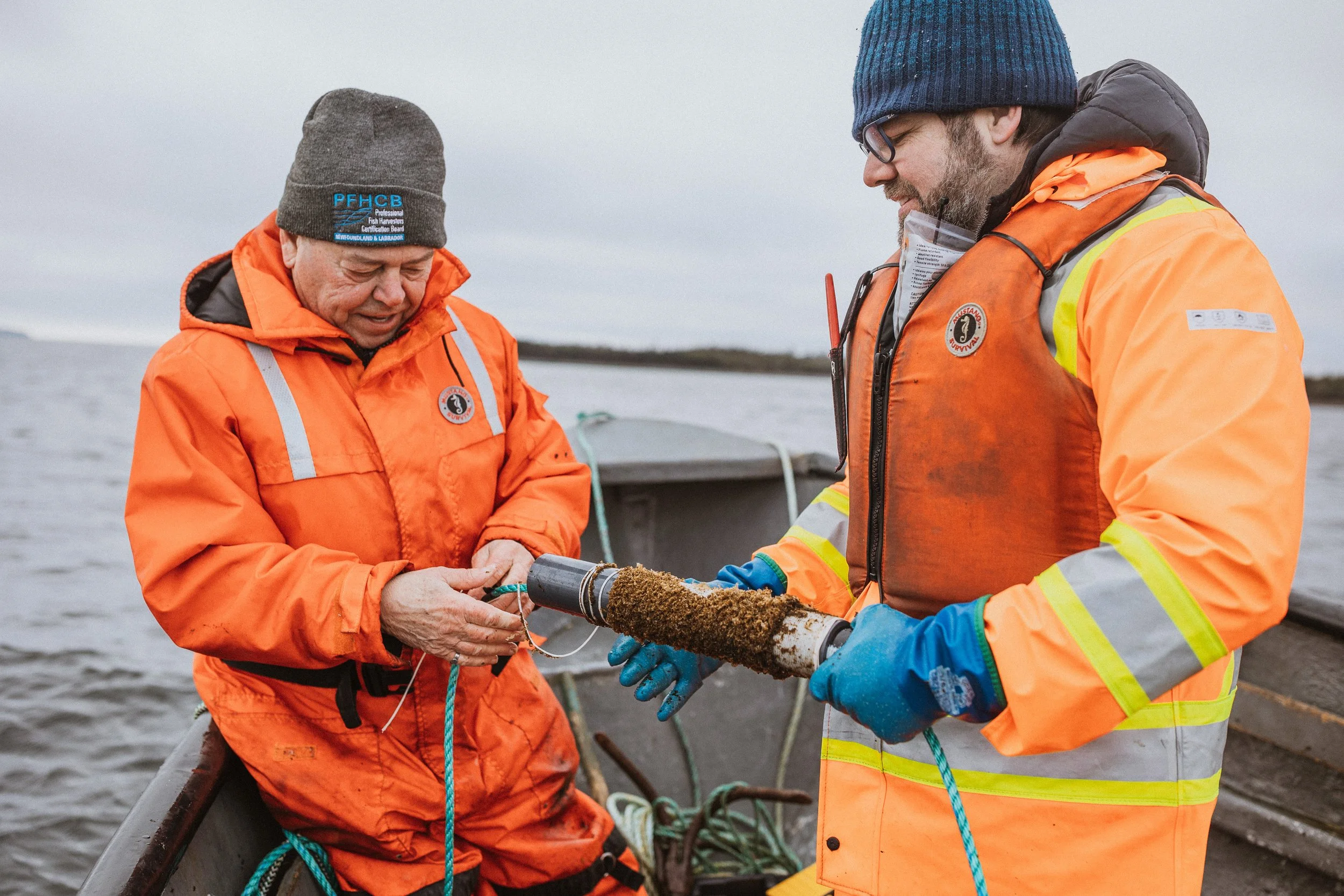
HoldFastNL is testing whether seaweed can help solve the problem, piloting kelp arrays near a municipal wastewater outfall in Conception Bay South. There, a 200-meter pipe releases treated effluent into the bay through a series of diffusers—similar to many wastewater outfall designs in coastal communities across North America. As a supplement to existing systems, kelp lines are placed directly over the diffusers, allowing growing seaweed to absorb nitrogen and phosphorus before they disperse into the broader bay.
Their first season in 2024–25 brought challenges with rough conditions tangling lines and delaying outplanting. However, once the kelp established itself, the growth was remarkable. “It grew like crazy,” Michael says. “It was really boosted by all the nutrients coming out of the pipe.”
Encouraged by those results, HoldFastNL upgraded their farming system from a single-line array to an 11-line catenary array with support from GreenWave. The expanded system is an early test of whether seaweed can remove nutrients at scale. Researchers are also working with the team to track nutrient uptake and changes in water quality.
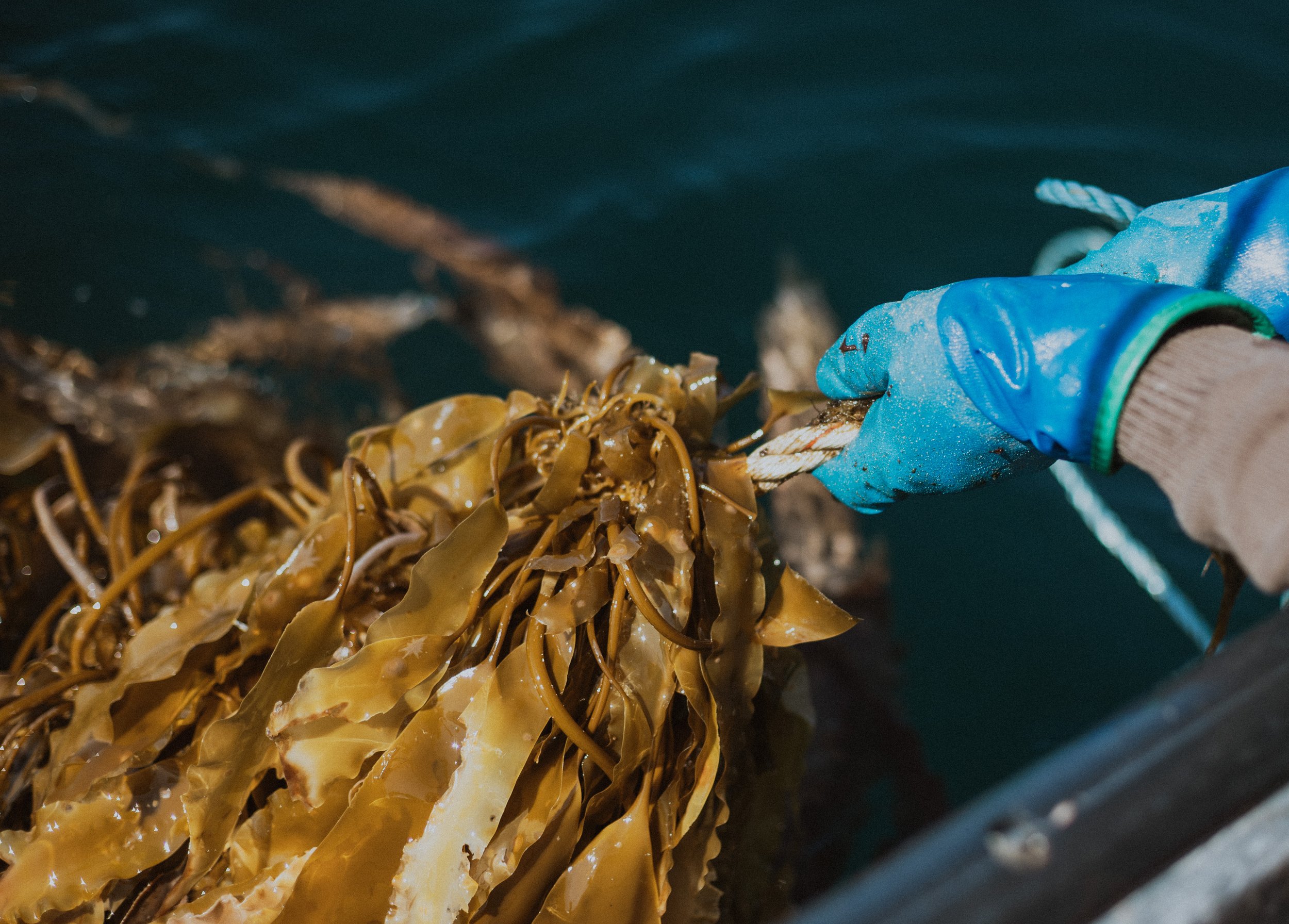
Last year's harvest was donated to a local gardening club for use as a soil amendment. This year, Michael is exploring whether the kelp from this site can be processed into a biostimulant, running it through the same systems HoldFastNL uses for kelp harvested at their commercial farm in Saint Mary's Bay, building on earlier collaboration with GreenWave to expand processing capacity.
For farmers, this work creates additional economic opportunities. “If you're getting paid as a service to offset nutrients from a wastewater outfall, that subsidizes your farm,” Michael says. “Then you're more competitive. It’s a service and a product.”
This model also creates new opportunities for coastal workers. The communities facing the steepest regulatory pressure are often the same ones with deep ties to the water. "These towns have people who know how to go out on speedboats and haul lines," Michael says. "They already have that skill set."
Seaweed carbon credits may not have taken hold, but kelp’s role as living water infrastructure may just be beginning. If projects like HoldfastNL’s can demonstrate measurable nutrient removal at scale, the implications could extend well beyond one town. Coastal communities across North America face similar regulatory pressures and infrastructure costs. "If we can prove this out at scale,” Michael says, “this could be a real tool for coastal communities."