
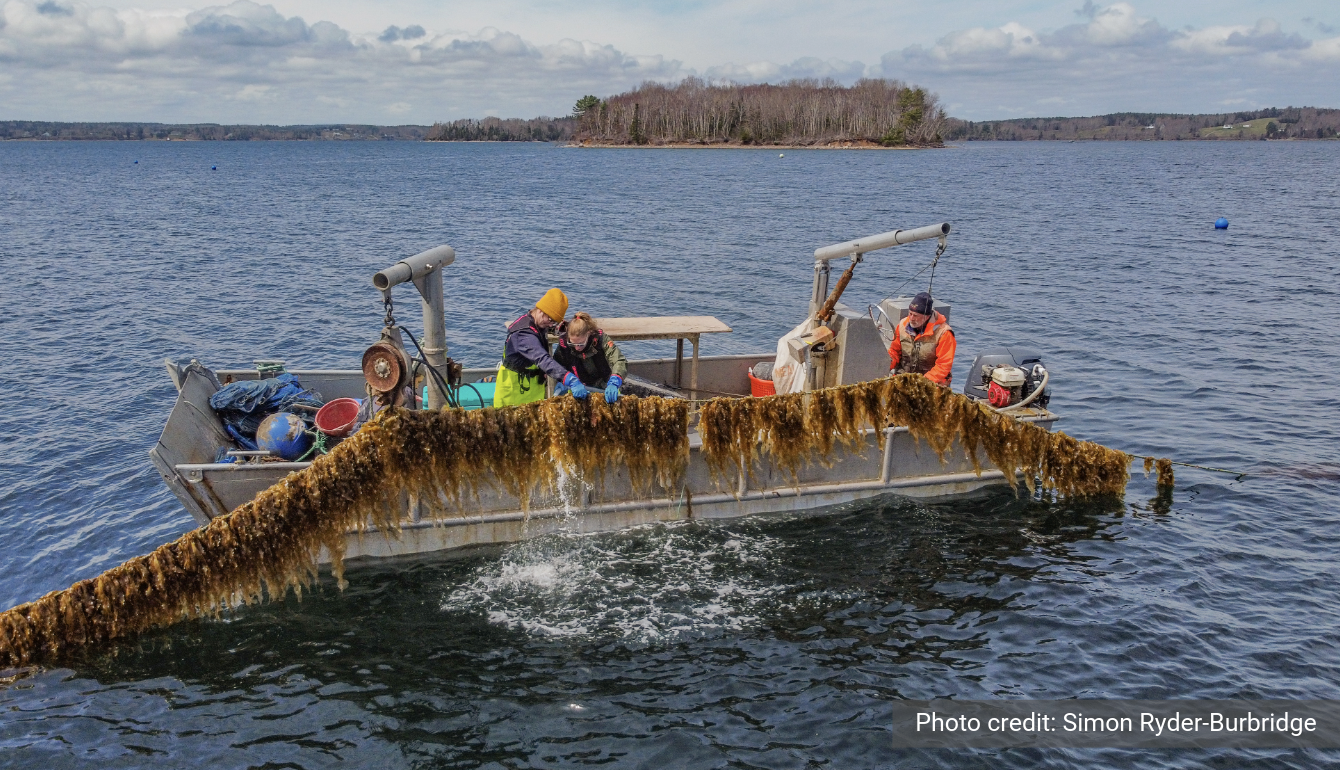
Across Canada, the emerging kelp industry is grappling with how to turn growing interest and investment into viable businesses for ocean farmers. In Nova Scotia, more than 550 hectares of ocean are licensed for kelp farming. But getting a farm up and running means investing in a crop with uncertain sales prospects, limited local processing, and a narrow window each spring to move the harvest before it spoils.
That's where organizations like Ecology Action Centre (EAC) can play an important role: helping farmers navigate the challenges that are difficult to tackle alone, while ensuring they have a voice in shaping the industry.
The Halifax-based environmental organization has more than 50 years of experience working on fisheries and coastal livelihoods. Six years ago, EAC launched Kelp Kurious to support Atlantic Canada's emerging kelp farming sector. Since then, the team has helped roughly half of the region's ocean farmers get licensed, including shellfish growers looking to add kelp to their farms.
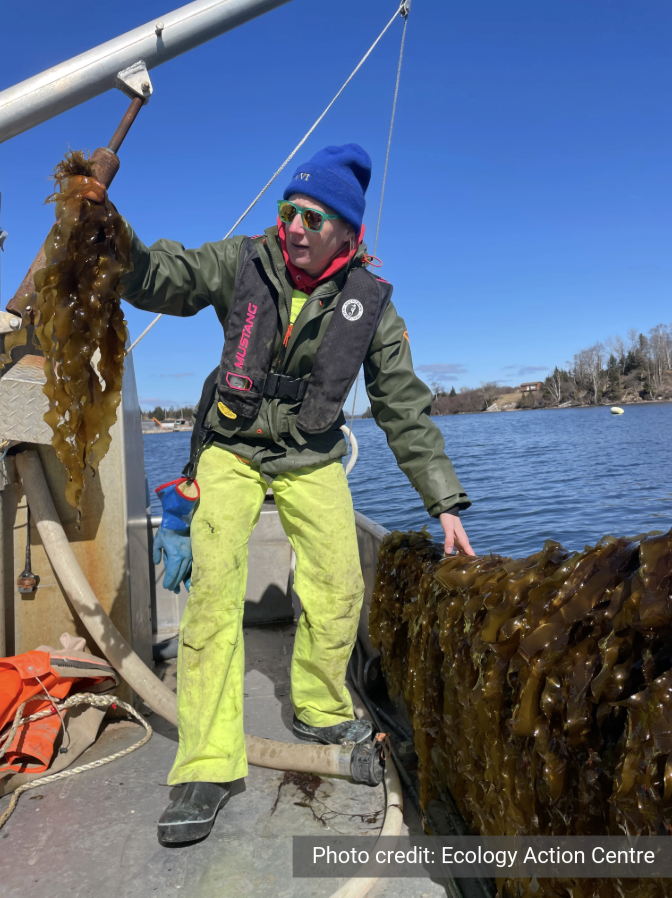
Shannon Arnold, EAC's Associate Director of Marine Programs, says the challenge now is helping licensed farmers overcome the uncertainty that's keeping them from starting kelp production.
In its early years, Kelp Kurious cast a wide net, hosting introductory workshops for anyone interested in kelp farming. Now, the team is focusing on farmers and product developers ready to make a commitment. They call it taking people from “Kelp Kurious to Kelp Serious.”
That means individualized support, whether walking a farmer through the permitting process or helping a product developer navigate food inspection requirements and funding applications. It's a hands-on approach that reflects the kind of farmer-centered support at the heart of GreenWave's own training programs.
Beyond helping farmers navigate existing rules, EAC also works to change them. Many of the regulations kelp farmers face, from leasing and permitting to water testing and processing, were designed with industrial-scale aquaculture in mind. EAC’s goal is to improve policy and regulations to make it easier for small and medium-scale kelp farms to operate while protecting the marine environment.
EAC also farms kelp at a nearly 15-hectare site in Mahone Bay, shared with a longtime local shellfish farmer, and operates a seed nursery in a former mussel processing plant. "It's not a high-end lab," Shannon says. "Part of our role is showing farmers that they can get into this on their own, from start to finish."
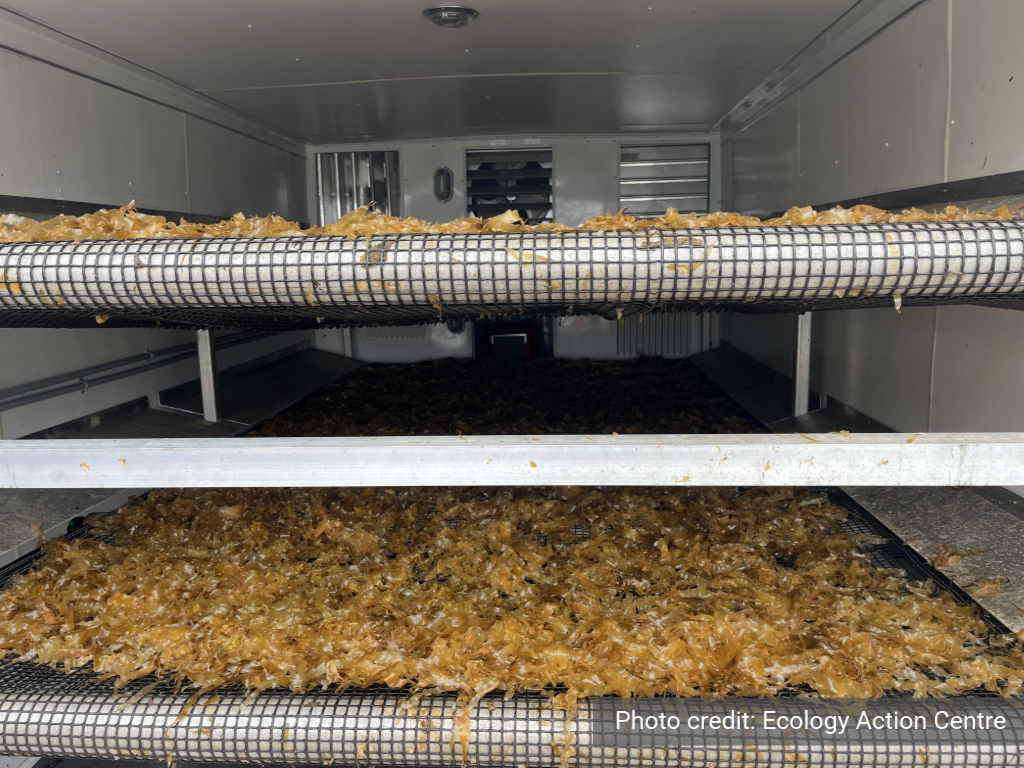
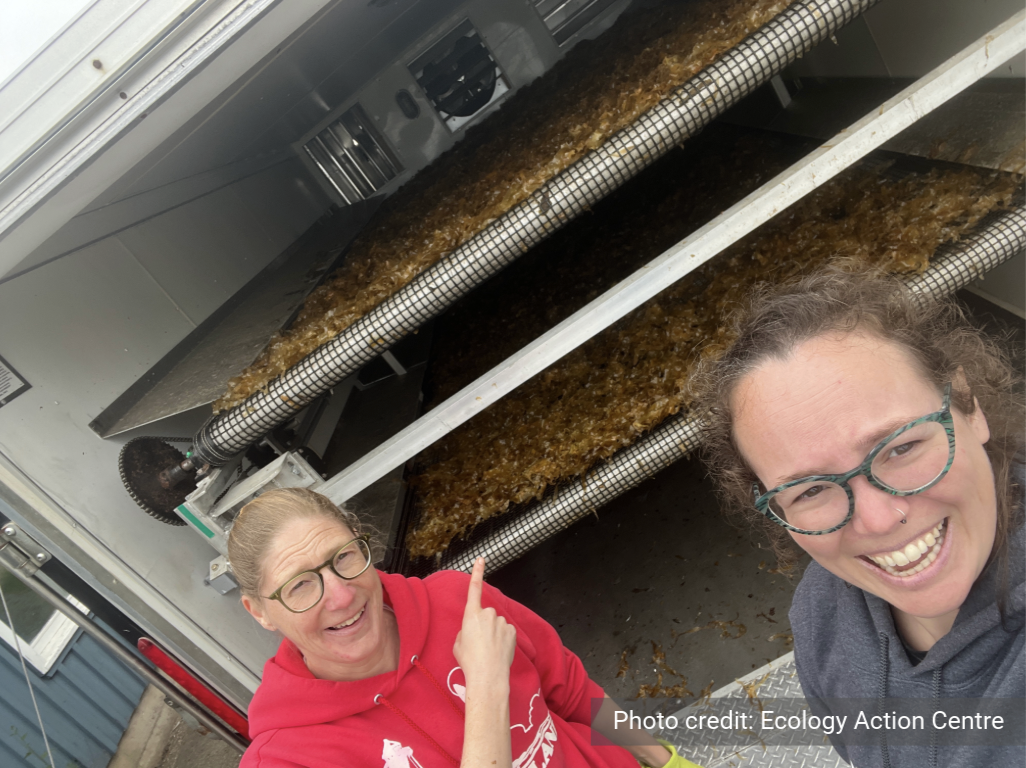
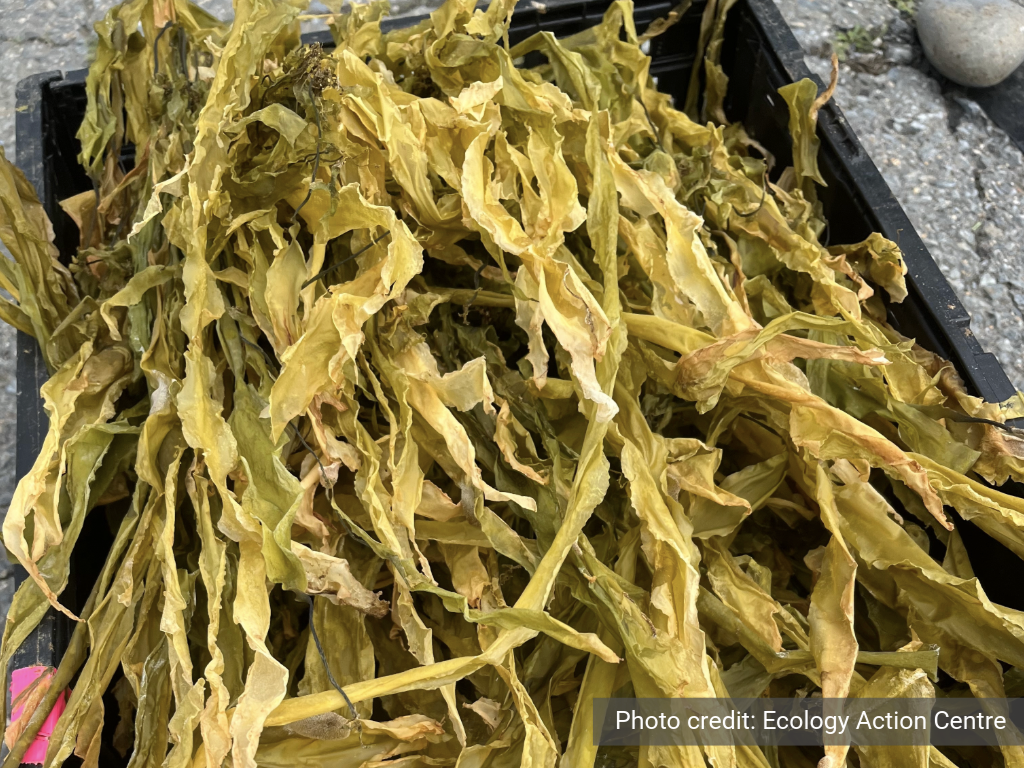
Getting the crop out of the water is only part of the challenge. EAC recently added a hammer mill and a custom-built mobile kelp dryer to address a major infrastructure gap: primary processing. The equipment is intended to allow farmers to dry and store their kelp rather than sell it fresh within days of harvest, giving them flexibility while the market is still developing.
“We think primary processing is really needed in our region to build confidence,” Shannon says. “We want farmers to feel assured that they can start producing, start storing, start looking for buyers, and get over that hump of hesitancy about spending the money to put lines in the water.”
Even with those tools, reliable markets remain a hurdle. North American kelp costs more to grow than tropical seaweeds, and Shannon acknowledges that manufacturers scaling seaweed products may naturally gravitate toward the most affordable raw material. EAC is helping develop products where the qualities of North American kelp and local sourcing make them a competitive choice, including biodegradable agricultural plastics and kelp-based biostimulants for home gardeners. Its work also includes partnerships with Mi'kmaq communities and companies interested in sourcing from Indigenous-led businesses. The team is also exploring biorefining, which involves extracting the most valuable compounds from kelp first and finding uses for the remaining biomass.
Beyond helping individual farmers get started, EAC wants to ensure that Atlantic Canada's kelp sector remains rooted in small- and medium-scale businesses. "From an economic and rural community point of view, small independent businesses are the lifeblood of our communities," Shannon says.
Atlantic Canada still has roughly 10,000 independent small-boat fishermen, in part because of policies requiring inshore fishermen to own and operate their boats. Aquaculture has no comparable protections. Shannon sees an opportunity for kelp farming to support independent businesses and complement the livelihoods that have long sustained coastal communities.
“In the kelp value chain, small and medium businesses are very important for spreading economic benefits through their communities,” she says.
Video credit: Simon Ryder-Burbridge
Shannon projects the next five years will be a critical period for shaping the sector. Alongside production and processing capacity, small farmers will need shared structures, such as cooperatives, to aggregate supply and negotiate prices collectively before larger buyers enter the market.
“We feel a lot of urgency to get some of those governance structures in place so people can feel comfortable staying small,” Shannon says.
Building a farmer-led kelp sector takes more than getting lines in the water. It requires infrastructure to process and store a harvest, markets that value domestically grown kelp, and cooperative structures that allow independent farmers to compete without giving up ownership.
As Atlantic Canada looks to the next phase of kelp farming, the goal isn't simply to grow the sector, but to build one that works for the people and communities at its center.