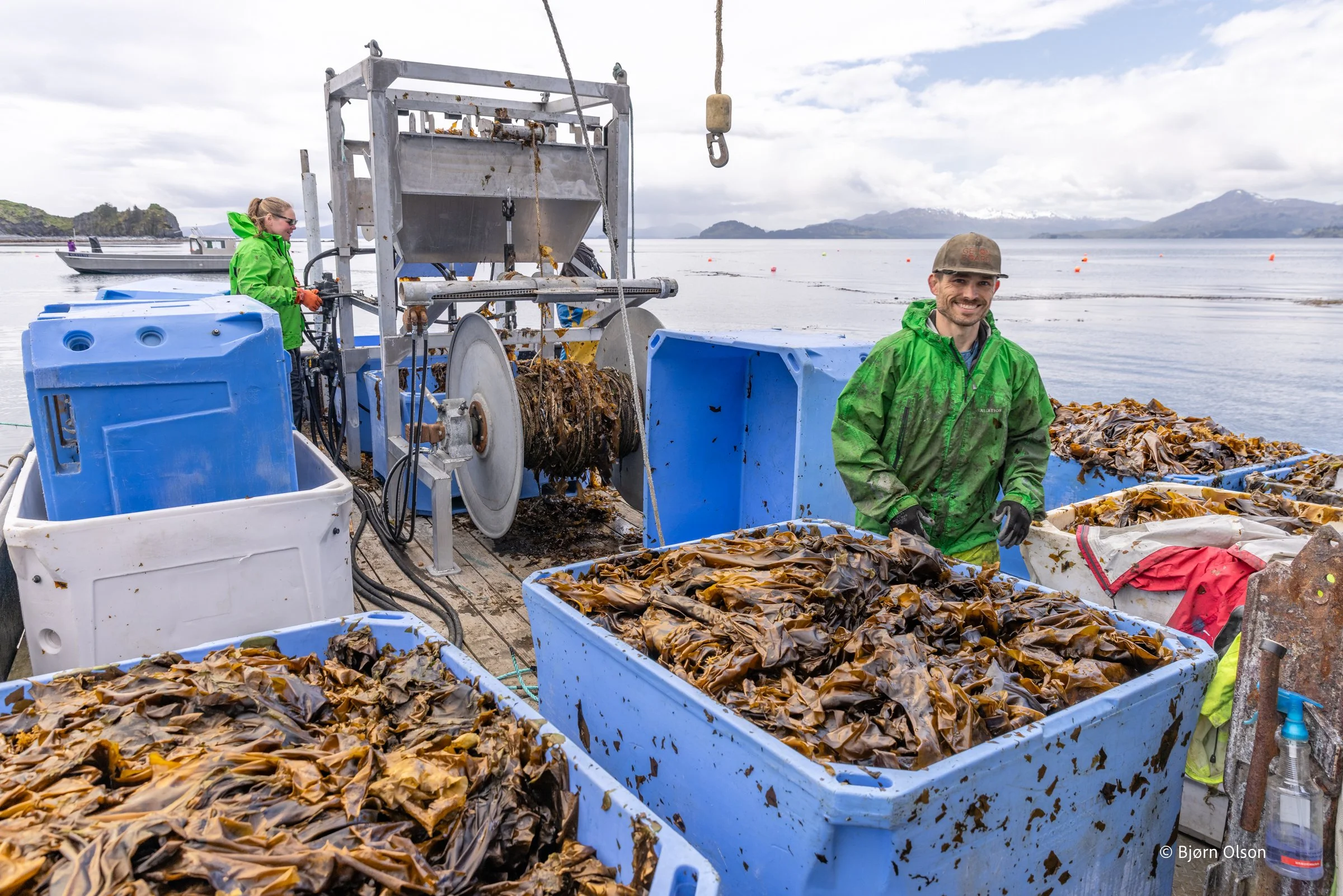
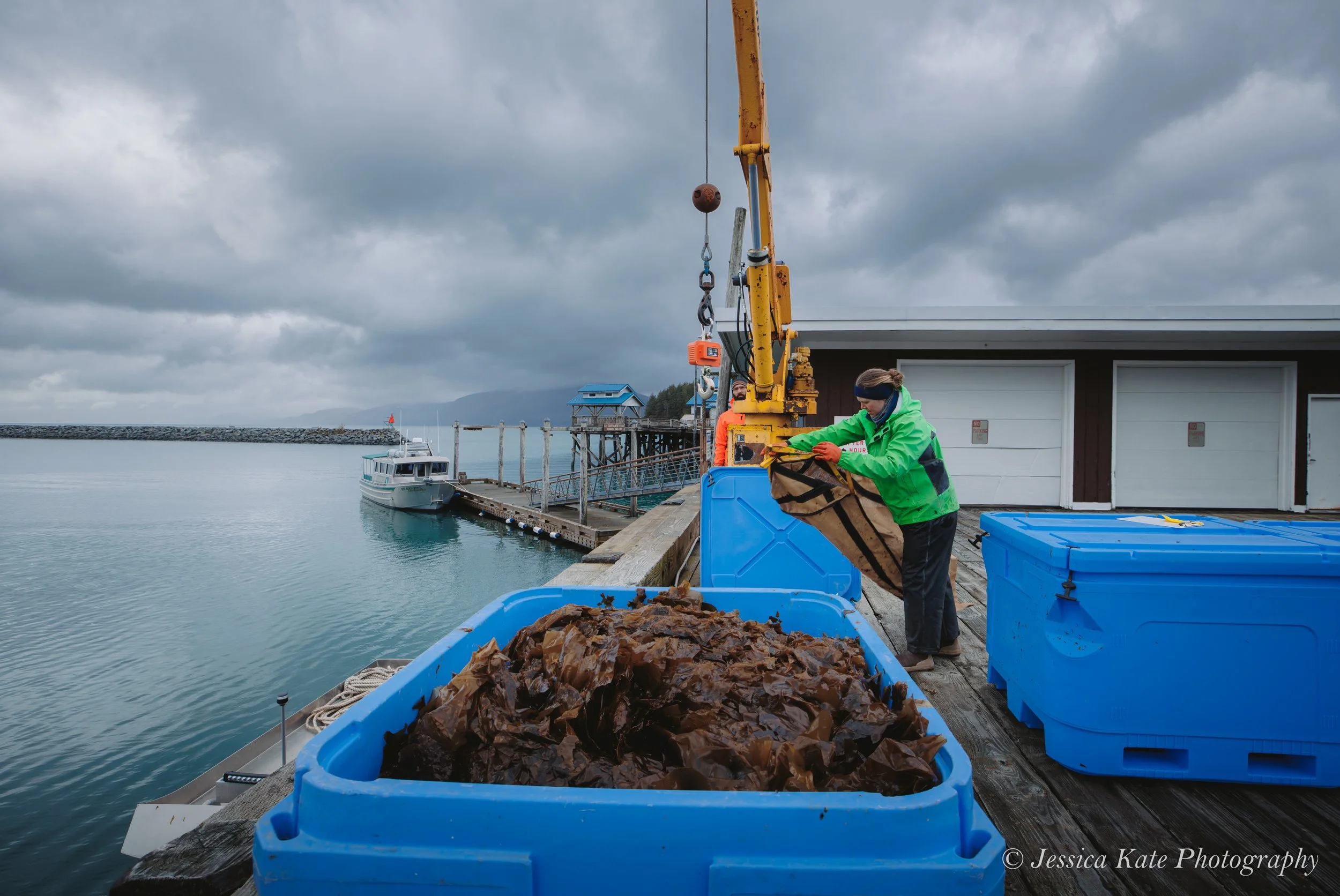
Kelp farmers take on risk long before harvest. In the fall, they buy seed, outplant it in the water, and spend the winter tending their lines, months before they know exactly how much kelp they’ll harvest or whether buyers' needs will change. When orders shift mid-season, farmers can be left shouldering the cost.
This season, GreenWave is taking on some of that risk in Alaska. Working with nine farms across Kodiak and Cordova, the organization is stepping into a new role in the state's kelp supply chain, aggregating supply from farmers and coordinating processing logistics with end buyers. “It’s another way of building capacity across the value chain while the market grows," says Lindsay Olsen, GreenWave's Director of Training and Support.
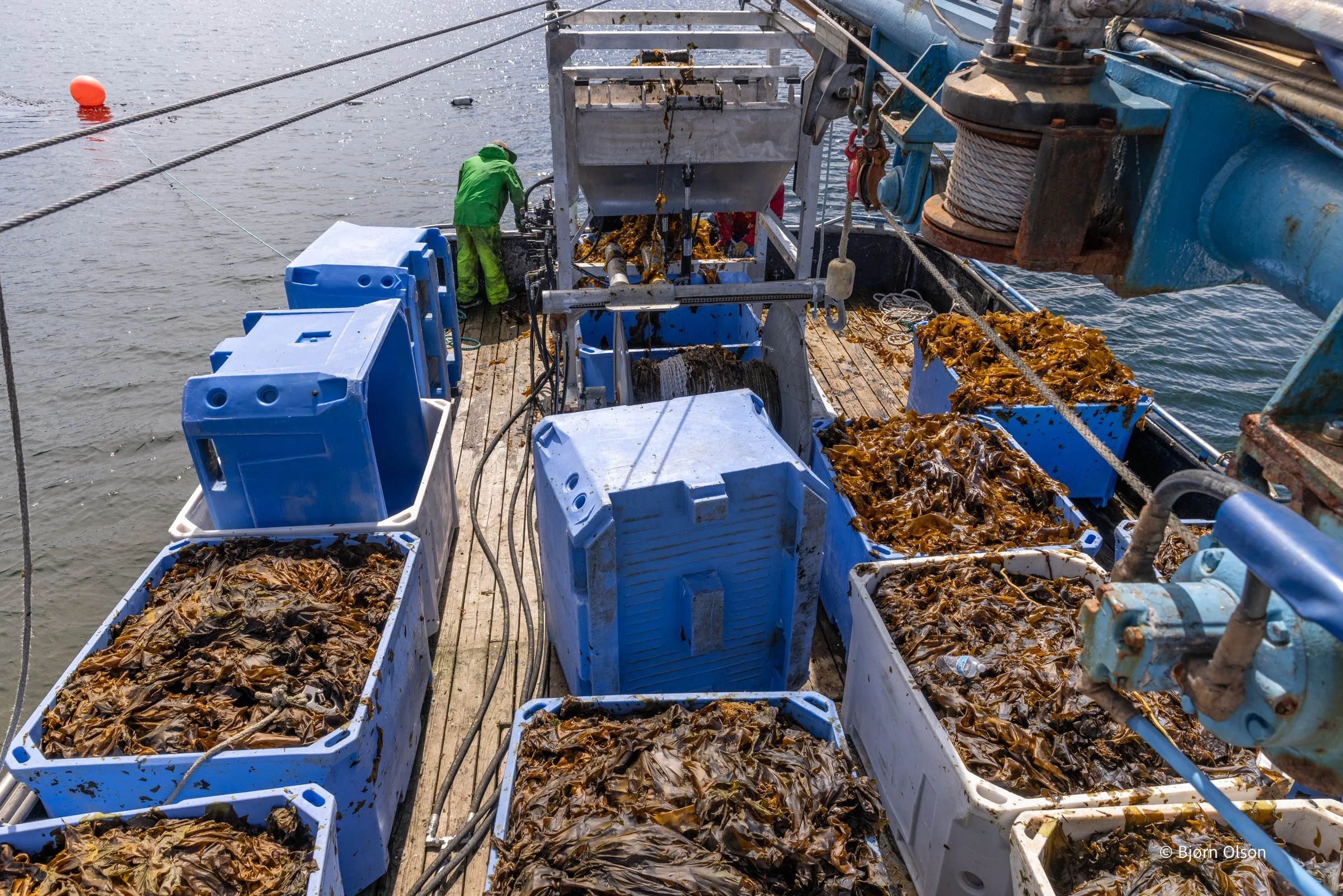
The Kodiak Ocean Growers cooperative formed in 2026 to give farmers in the region a collective voice and a stronger negotiating position with buyers. But coordinating sales requires significant time and resources: tracking production across farms, managing buyer relationships, and organizing harvest logistics. To manage that workload, co-op members voted to have GreenWave take on harvest aggregation, stabilization, and getting kelp to market, allowing farmers to focus on their core work of growing kelp at this stage of the industry.
GreenWave kicked off that work earlier this fall, providing farmers with forward contracts—agreements to purchase a set amount of kelp at harvest—and paying a 10% deposit to help offset seed costs.
At harvest, GreenWave will pay farmers before receiving payment from buyers, helping bridge a cash-flow gap so farmers aren’t left waiting months to get paid. GreenWave will also coordinate stabilization, the first processing step that prepares fresh kelp for storage and shipment, in the communities where it is harvested.
The arrangement also changes who bears the risk when orders shift. GreenWave commits to purchasing the contracted amount from farmers, even if a buyer later reduces an order. The organization then takes responsibility for finding another buyer or determining how to manage the excess kelp.
“What we are doing is guaranteeing to farmers that we will purchase what we say we’ll purchase,” says Lindsay.
Buyers face their own challenges. Until now, companies sourcing kelp from Alaska have managed separate purchasing relationships with individual farms and regional cooperatives. This disjointed approach has made it difficult for buyers to secure consistent supply.
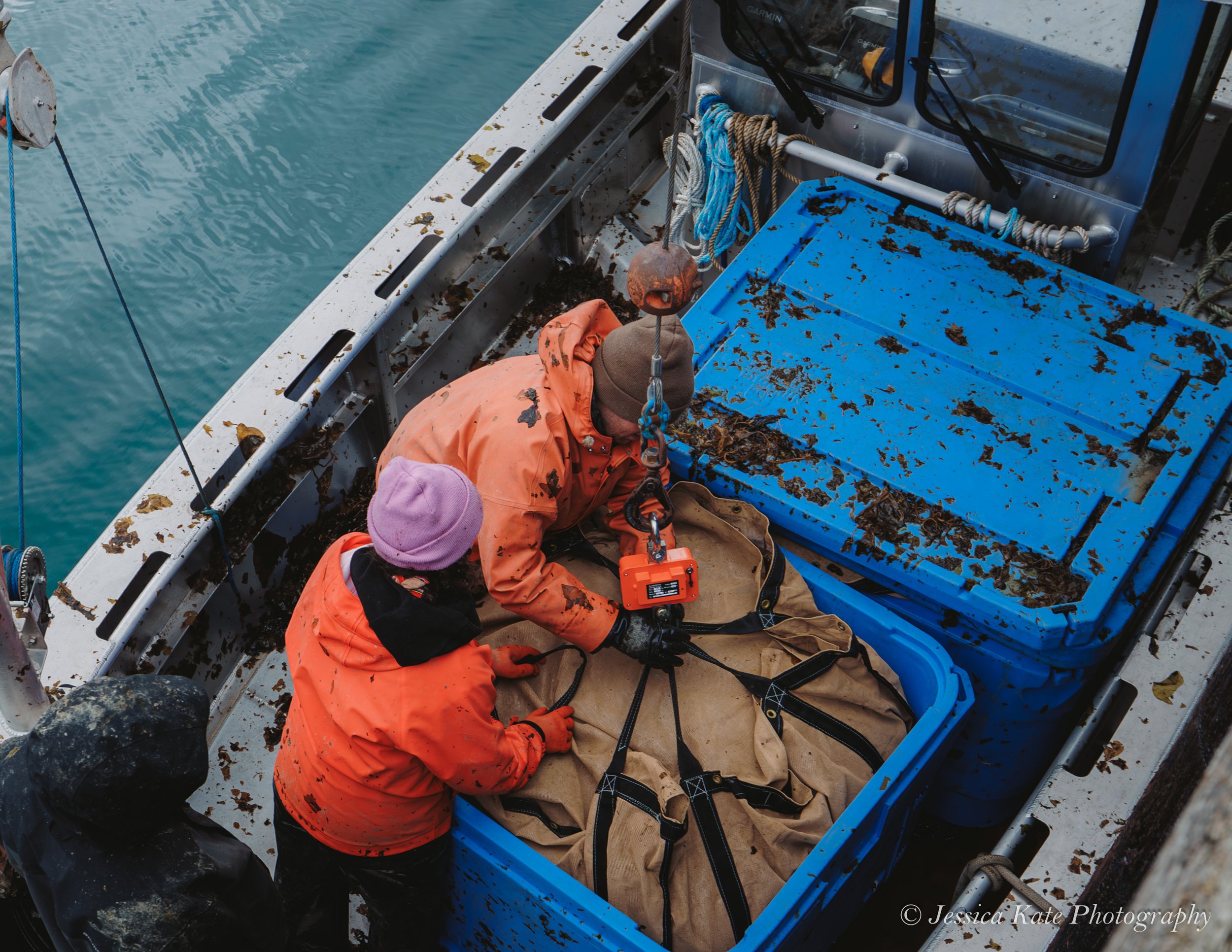
"Communication was very fragmented," says Lindsay. "It became a challenge for buyers to manage that sourcing approach across so many different accounts."
By coordinating supply across farms, GreenWave can help buyers navigate variations in individual harvests through a single point of contact, with more consistent supply and greater flexibility in payment timing.
GreenWave’s economic modeling with Alaska farmers has highlighted just how thin the margins can be. Aggregation and stabilization are essential to getting kelp to market, but the economics don’t yet support commercial businesses taking on that work. As a nonprofit, GreenWave can support the supply chain while the market matures without the pressure to generate a commercial profit.
GreenWave piloted a similar approach in Maine last year, purchasing kelp from nine farms and coordinating landing, stabilization, and shipping. The experience helped establish a model for managing logistics and setting expectations across the supply chain, and GreenWave is now coordinating similar work for 13 farms in Maine this year.
The longer-term goal is for farmers to have the information they need to evaluate the economics of taking on this work. "We're committed to being fully transparent with farmers about costs," Lindsay says. "That means sharing all the expenses we incurred and what it cost on a per-unit basis to produce each product, so that farmers understand where there is room for future margins at scale."
As demand becomes more consistent and the economics improve, farmers may have more options for how they participate in the supply chain, including through cooperatives or shared ownership models. GreenWave's work today is building the infrastructure, experience, and market relationships to make those options possible.